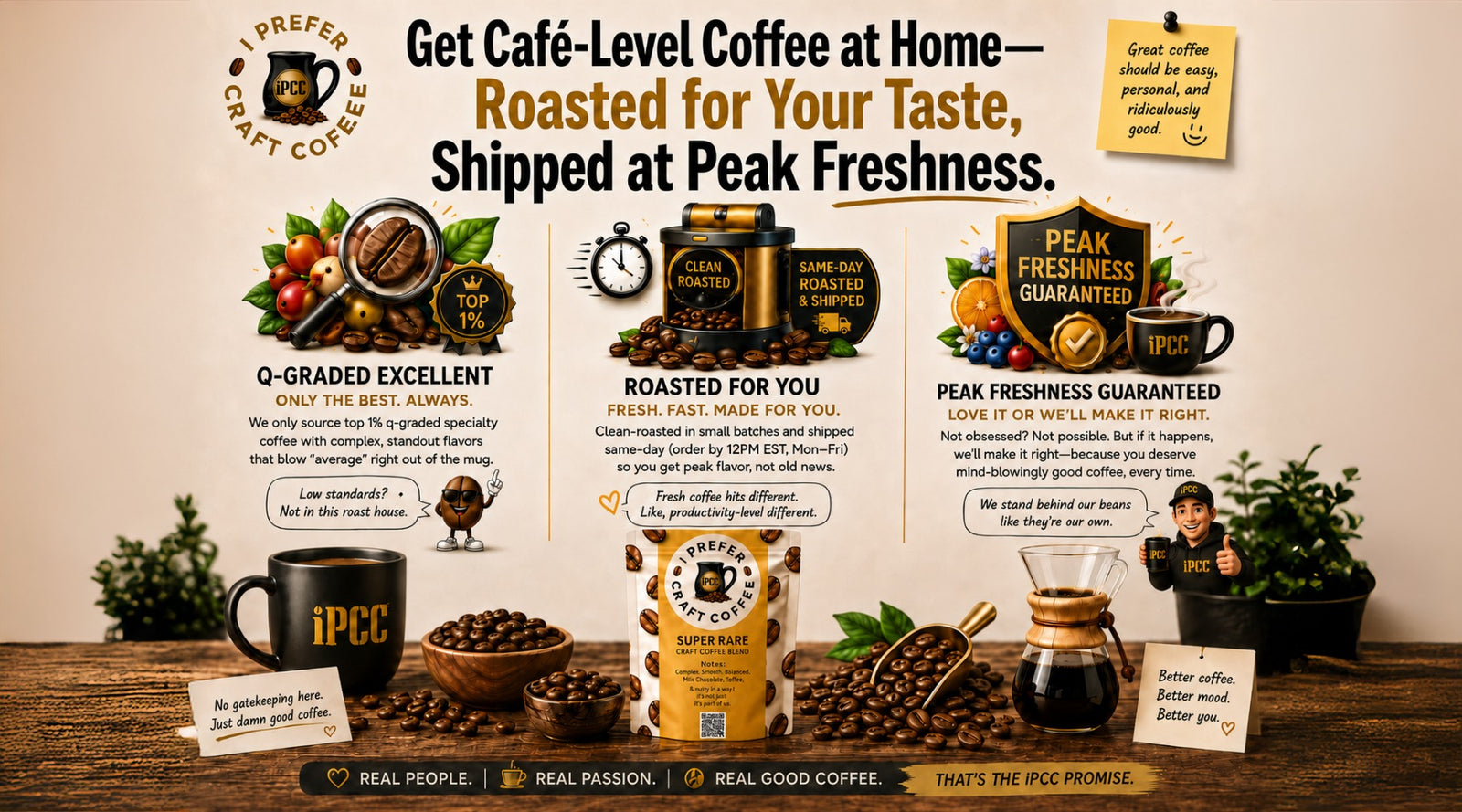
How To Get Café Quality Coffee at Home
How To Get Café Quality Coffee at Home Without Buying a Fancy Machine
Learn how to get café quality coffee at home with fresh roasted specialty coffee, simple brew tips, and beans roasted for you—not a warehouse.
I used to think How To Get Café Quality Coffee at Home meant one thing:
Buy better gear.
A shinier brewer. A grinder that sounds like a small wood chipper. A scale so serious it makes you feel judged.
Here is the truth: most bitter home coffee is not a machine problem. It is a bean problem.
If your coffee tastes like hot cardboard water, the fastest fix is simple. Stick with fresh, high-scoring specialty coffee from an independent roaster you trust. Ditch the commercial coffee. Use better beans. Then use a simple brew plan you can repeat.
That is how you get the best tasting coffee at home without becoming a full-time coffee nerd.
Quick Answer: How Do You Get Café Quality Coffee at Home?

To get café quality coffee at home, start with fresh specialty coffee that has a roast date, not just a best-by date. Choose coffee beans roasted to order, grind right before brewing, use filtered water, and match the roast to how you drink coffee.
That alone can make your coffee smoother, sweeter, cleaner, and way less bitter.
The machine helps.
The beans lead.
Why Most Home Coffee Tastes Bitter, Flat, Or Sad
Most home coffee lovers are doing their best.
They buy the “premium” bag.
They use the nice machine.
They follow the scoop instructions.
Then the cup still tastes bitter, burnt, sour, weak, or like someone brewed sadness in a mug.
That is because most commercial coffee is built for shelf life, not peak flavor.
It may sit in warehouses. It may have a best-by date instead of a roast date. It may be roasted dark to hide old, flat, or low-grade flavors.
That does not mean you are bad at brewing.
It means your beans may be working against you.
If you want a deeper buying guide, start with my Best Guide To Buy Great Coffee. It breaks down how to buy better beans without getting trapped in coffee label nonsense.
What Happens When You Use Fresh Specialty Coffee
When you use fresh, high-scoring specialty coffee from a roaster you trust, your cup can change fast.
You can get:
-
Smoother flavor.
-
Less bitterness.
-
More sweetness.
-
Better aroma.
-
Cleaner finish.
-
More flavor without more effort.
-
Coffee you actually look forward to drinking.
That is the goal.
Not coffee theater.
Not latte art Olympics.
Just a better morning.
If you want fresh roasted coffee beans online, look for coffee that is roasted close to when it ships. My Fresh Roasted Coffee Beans Online page explains why freshness matters so much for home brewing.
7 Steps To Get Café Quality Coffee at Home
1. Start With Fresh Coffee Beans, Not Better Buttons
Before you upgrade your coffee maker, upgrade the beans.
Better coffee starts with better beans.
Look for:
-
A real roast date.
-
Specialty-grade coffee.
-
Coffee roasted in small batches.
-
Coffee from an independent roaster.
-
Coffee that matches how you actually drink it.
If your bag only has a best-by date, that tells you when it expires.
It does not tell you when it was roasted.
That matters.
Fresh coffee has more aroma, sweetness, and life. Old coffee tastes dull because the good stuff has already left the building.
Tiny coffee funeral. Very sad.
2. Choose The Right Coffee For Your Taste
Do not pick coffee based on what sounds fancy.
Pick it based on what you want your cup to do.
Use this simple rule:
-
If you want smooth and balanced, choose a medium roast.
-
If you hate sharp coffee, choose low-acidity coffee beans that taste good.
-
If you make espresso, choose a blend built for espresso.
-
If you want classic morning coffee, choose a breakfast-style blend.
-
If you want something rare and floral, choose a Geisha.
-
If you want iced coffee with zero drama, choose a cold brew kit.
Here are easy starting points:
For smooth daily coffee, try my Washed Guatemala Coffee. It is a great fit if you want best coffee beans for smooth coffee and a cup that feels clean, balanced, and easy to drink.
For espresso, try my Espresso Blend. It is made for people who want a rich, smooth shot without getting punched in the face by bitterness.
For classic breakfast coffee, try my Deli Donut Blend. This is for people who want coffee that tastes like coffee, but better.
For a rare cup, try my Peruvian Geisha. This is for the “I want to taste something special” morning.
For iced coffee, try my Fast & Easy Cold Brew Kit. It keeps cold brew simple: steep, remove the pouch, drink.
3. Match The Coffee To Your Brewer
You do not need a café setup.
You need the right bean for the brewer you already own.
Use this guide:
-
Drip coffee maker: Use medium roast whole bean coffee. Start with the Deli Donut Blend or Washed Guatemala Coffee.
-
French press: Use medium to medium-dark coffee with a coarse grind.
-
Pour over: Use clean, fresh coffee with a medium-fine grind.
-
Espresso machine: Use the Espresso Blend and dial in slowly.
-
Cold brew: Use the Fast & Easy Cold Brew Kit.
If you want more home recipes, save my Best Home Coffee Recipes. It gives you simple brew starting points without making your kitchen feel like a science fair.
4. Use Whole Bean Coffee When You Can
Whole bean coffee stays fresher longer than pre-ground coffee.
Why?
Because grinding coffee opens it up to air. Air steals flavor. Rude, but true.
If you can grind right before brewing, do it.
If not, fresh ground coffee from a trusted roaster can still beat old grocery beans by a mile.
For the best whole bean coffee for home brewing, choose beans that were roasted close to your order date and have a clear flavor goal.
Smooth.
Bold.
Low acid.
Classic.
Rare.
Cold brew.
Simple wins.
5. Use Filtered Water
Coffee is mostly water.
So if your water tastes weird, your coffee will taste weird.
Use filtered water if possible.
You do not need magic mountain water blessed by a monk.
Just avoid water that smells like a swimming pool or tastes like pennies.
Start here:
-
Use clean filtered water.
-
Brew between 195°F and 205°F.
-
If coffee tastes sour, go a little hotter or grind finer.
-
If coffee tastes bitter, go a little cooler or grind coarser.
Small changes matter.
6. Use A Simple Coffee Ratio
Do not guess with random scoops forever.
Use this starting ratio:
1 gram of coffee for every 16 grams of water.
That is the sweet spot for many home brewers.
Easy examples:
-
20 grams coffee to 320 grams water.
-
30 grams coffee to 480 grams water.
-
45 grams coffee to 720 grams water.
No scale?
Use 2 tablespoons of coffee for every 6 ounces of water as a basic starting point.
Is it perfect?
No.
Will it beat panic-scooping before work?
Yes.
7. Adjust With “If X, Then Y” Rules
This is where home coffee gets easy.
Use these rules:
-
If your coffee tastes bitter, then grind coarser.
-
If your coffee tastes sour, then grind finer.
-
If your coffee tastes weak, then use more coffee.
-
If your coffee tastes too strong, then use more water.
-
If your coffee tastes flat, then check the roast date.
-
If your coffee tastes burnt, then stop buying oily dark commercial beans.
-
If your coffee tastes better but still not great, then try a different roast style.
This is how to make coffee taste better at home without buying a $2,000 machine and naming it Gerald.
Fresh Specialty Coffee vs Warehouse Specialty Coffee

| Feature | Fresh Specialty Coffee | Warehouse Specialty Coffee |
|---|---|---|
| Freshness | Roasted close to when you order | Often roasted far before purchase |
| Date on bag | Roast date | Usually best-by date |
| Flavor | Sweeter, cleaner, more alive | Flatter, duller, sometimes bitter |
| Aroma | Stronger and fresher | Fades over time |
| Buying experience | More personal and guided | More generic |
| Best for | Home coffee lovers who want better cups | Convenience shoppers |
| Risk | You may need to learn your taste | You may keep blaming your brewer |
| Best move | Buy from an independent roaster you trust | Use only if freshness is clear |
This is why fresh coffee beans vs grocery store coffee is not just a tiny detail.
It is the whole game.
Freshness And Buying Guidance: What Actually Matters
Roast Date Beats Best-By Date
A roast date tells you when the coffee was roasted.
A best-by date tells you when the bag should still be “acceptable.”
I do not want acceptable coffee.
I want “wow, I made this at home?” coffee.
Look for coffee beans with roast date when possible. This is one of the easiest ways to avoid stale, flat coffee.
Choose Roasts Based On Taste, Not Ego
Light roast is not “better.”
Dark roast is not “stronger.”
Medium roast is not boring.
Each roast has a job.
Use this simple guide:
-
Light roast: brighter, fruitier, more origin flavor.
-
Medium roast: balanced, sweet, smooth, easier for most people.
-
Medium-dark roast: richer, fuller, more chocolate and roast flavor.
-
Dark roast: bold, smoky, heavy, less origin flavor.
If you are new to specialty coffee, start with medium roast.
It is the friendly handshake of better coffee.
Store Your Coffee Like It Has Feelings
Coffee hates air, heat, light, and moisture.
Keep it:
-
Sealed.
-
Cool.
-
Dry.
-
Away from sunlight.
-
Away from the freezer for daily use.
Do not store coffee above your stove.
That is not storage.
That is bean punishment.
Single Origin vs Blends
Single origin coffee comes from one region, farm, or producer group. It can show clear flavors like fruit, florals, chocolate, nuts, or citrus.
Blends combine coffees to create a specific flavor goal.
Neither is automatically better.
Use this rule:
-
Choose single origin if you want unique flavors.
-
Choose blends if you want consistency and balance.
-
Choose espresso blends if you want easier espresso.
-
Choose breakfast blends if you want a smooth daily cup.
My Best Specialty Coffee Online page explains how I think about specialty coffee without turning it into a vocabulary quiz.
3 Specialty Coffee Tips Most People Miss
Tip 1: Freshness Does Not Fix The Wrong Roast
Fresh dark roast will still taste dark.
Fresh light roast will still taste bright.
Freshness helps flavor show up. It does not change the coffee’s personality.
So choose the roast that fits your taste.
Tip 2: “Strong” And “Bitter” Are Not The Same Thing
Strong coffee means more coffee flavor.
Bitter coffee means something went wrong.
Could be old beans.
Could be too fine a grind.
Could be water too hot.
Could be commercial coffee roasted until it gave up.
If you want coffee that is not bitter, start with fresh medium roast coffee and adjust grind before blaming your machine.
Tip 3: A Trusted Roaster Saves You Guesswork
The best roaster is not always the biggest one.
It is the one who helps you buy the right coffee for how you drink it.
If you want best craft coffee online, look for a roaster who explains the coffee in plain English, roasts fresh, and gives you a clear starting point.
You can learn more about my approach on About My Roastery.
Do Expensive Coffee Makers Make Better Coffee?
Sometimes.
But only after the basics are right.
A better machine can improve temperature, water flow, and consistency.
But if your beans are stale, oily, flat, or low quality, a better machine just makes expensive bad coffee.
Very efficient sadness.
If you are wondering do expensive coffee makers make better coffee, my answer is:
Yes, but fresh beans matter first.
That is why I recommend this order:
-
Fresh coffee beans.
-
Good water.
-
Correct grind.
-
Right ratio.
-
Better gear later.
This is how to brew better coffee without expensive equipment.
What Coffee Should You Buy First?

Use this simple decision guide.
If You Want Smooth Coffee
Start with Washed Guatemala Coffee.
Best for:
-
Smooth daily coffee.
-
Low bitterness.
-
Drip coffee makers.
-
People who want low acidity coffee beans that taste good.
If You Want Espresso
Start with Espresso Blend.
Best for:
-
Espresso machines.
-
Milk drinks.
-
Full-bodied coffee.
-
People who want rich flavor without burnt bitterness.
If You Want Classic Morning Coffee
Start with Deli Donut Blend.
Best for:
-
Drip brewers.
-
Morning routines.
-
Cream and sugar drinkers.
-
Black coffee drinkers who want comfort.
If You Want Something Rare
Start with Peruvian Geisha.
Best for:
-
Slow mornings.
-
Pour over.
-
Gift coffee.
-
People new to rare specialty coffee who want something memorable.
If You Want Easy Iced Coffee
Start with Fast & Easy Cold Brew Kit.
Best for:
-
Cold brew at home.
-
Low-effort brewing.
-
Smooth iced coffee.
-
Busy mornings.
What About Coffee Delivery Or Subscriptions?
If you drink coffee every day, fresh delivery helps.
You do not have to remember to buy coffee.
You do not run out.
You do not panic-buy stale beans at the store like a tired raccoon.
For simple ordering, visit my Guide To Fast & Easy Coffee Delivery.
If you are comparing options for the best coffee bean delivery, I also made this page: Best Coffee Bean Delivery.
If you want a more guided option, a coffee subscription for home can help you stay stocked with fresh coffee. My Best Craft Coffee Subscription page explains how to make fresh coffee easier without overthinking every bag.
This can also be the best coffee subscription for beginners if you want help choosing beans instead of guessing.
For the bigger picture, visit Best Tasting Coffee at Home.
The Simple Home Coffee Formula
Here is the whole plan in one place:
-
Buy fresh specialty coffee.
-
Choose the roast based on taste.
-
Use whole bean coffee if you can.
-
Grind right before brewing.
-
Use filtered water.
-
Start with a 1:16 ratio.
-
Adjust grind based on taste.
-
Store coffee sealed and dry.
-
Buy from an independent roaster you trust.
-
Repeat what works.
That is it.
No snob stuff.
No flavor wheel homework.
No pretending you know what “bergamot acidity” means before 8 a.m.
Just better beans, better brewing, and better mornings.
FAQ: How To Get Café Quality Coffee at Home
1. What is the easiest way to get café quality coffee at home?
The easiest way to get café quality coffee at home is to use fresh specialty coffee with a roast date, grind right before brewing, use filtered water, and start with a 1:16 coffee-to-water ratio.
2. Why does my coffee taste bitter at home?
Your coffee may taste bitter at home because the beans are stale, roasted too dark, ground too fine, brewed too hot, or extracted too long. Start with fresh medium roast coffee and adjust your grind coarser if the cup tastes harsh.
3. Do I need expensive equipment to make better coffee at home?
No. You do not need expensive equipment to make better coffee at home. Fresh coffee beans, clean water, the right grind, and a simple ratio usually improve your cup before a new machine does.
4. What is the best coffee for people new to specialty coffee?
The best coffee for people new to specialty coffee is usually a smooth medium roast or balanced blend. It gives you more flavor without feeling sour, sharp, or too intense.
5. Are coffee beans roasted to order better?
Coffee beans roasted to order are usually better for home brewing because they reach you closer to peak freshness. That means more aroma, more sweetness, and less flat, stale flavor.
6. What is the best coffee for people who hate bitter coffee?
The best coffee for people who hate bitter coffee is fresh medium roast specialty coffee with a clean finish. Look for smooth blends, washed coffees, and low-acidity coffee beans that taste good.
PS: Your Bonus Tip
PS: Before you change your machine, change your beans. Then use one simple recipe from my Best Home Coffee Recipes and repeat it 3 mornings in a row. That is how you know if the coffee is improving or if your sleepy hands are just freelancing again.
Also in Best Coffee To Buy Online Education
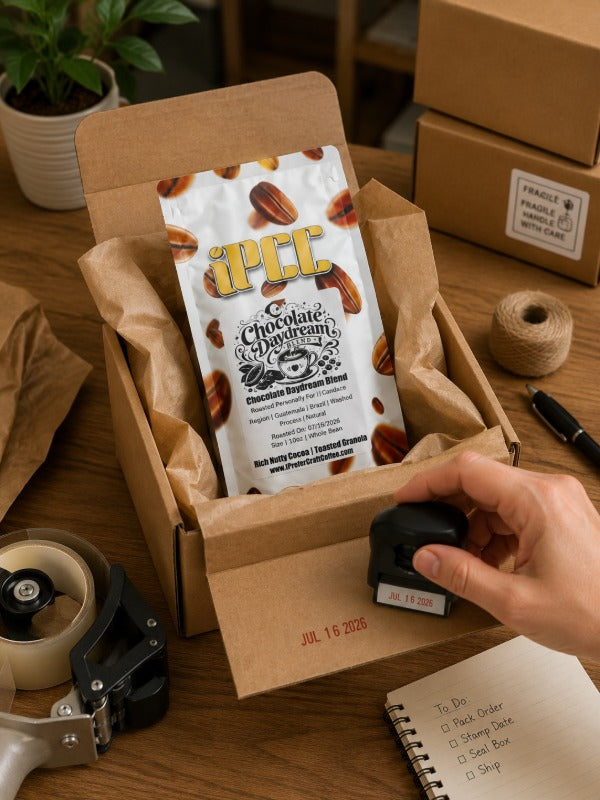

Best Coffee Bean Delivery: Why Fast Isn't Enough
This article explains what makes the best coffee bean delivery, arguing that shipping speed alone is meaningless without coffee beans roasted to order, a clear shipping cutoff, and real human customer support during delays, and offers a practical checklist for evaluating any roaster's delivery promise.
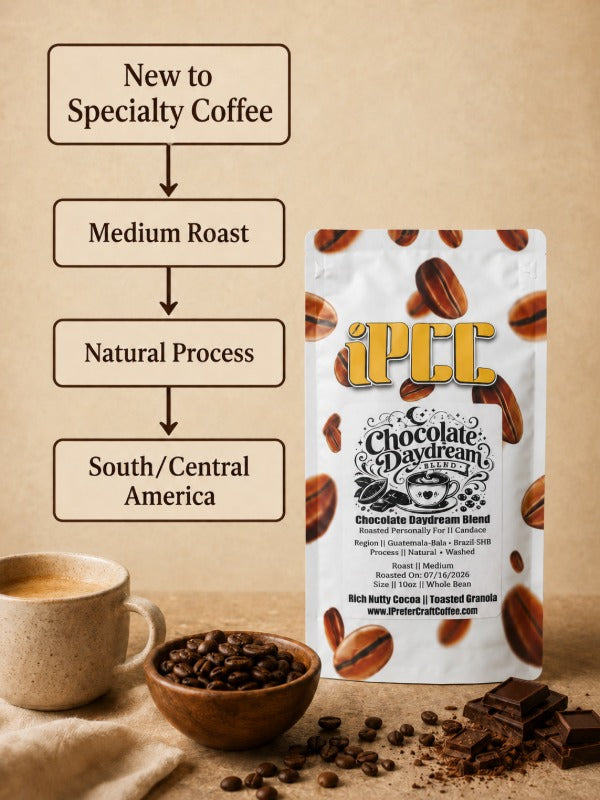

Best Tasting Coffee at Home: Where to Start
This article addresses the best tasting coffee at home as a genuinely subjective question, recommending a balanced, naturally processed medium roast from South or Central America as a starting point, and offering a simple tasting and note-taking method for home coffee lovers to discover their own preferences over time.
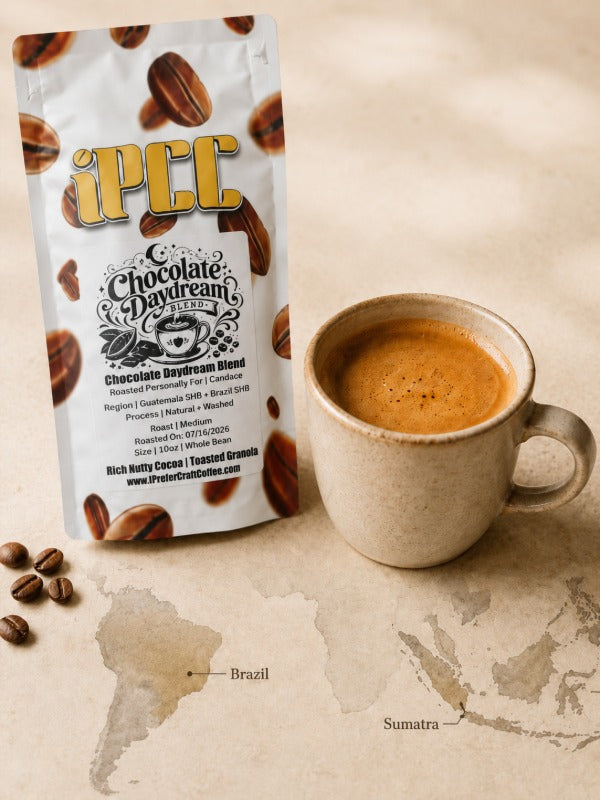

Low Acidity Coffee Beans That Taste Good at Home
This article identifies low acidity coffee beans that taste good, explaining how roast level, processing method, origin, and brew method like cold brew genuinely reduce acidity, and helps coffee drinkers avoid mass-market "gentle" coffee that sacrifices flavor for a low-acid claim.